
















- Ukraine’s autonomous interceptors stalk and destroy Russian Shaheds without human controls
- Ukraine compressed years of drone development into twelve battlefield months
- Brave1’s interceptor automates 95% of the kill chain — the human only picks the target
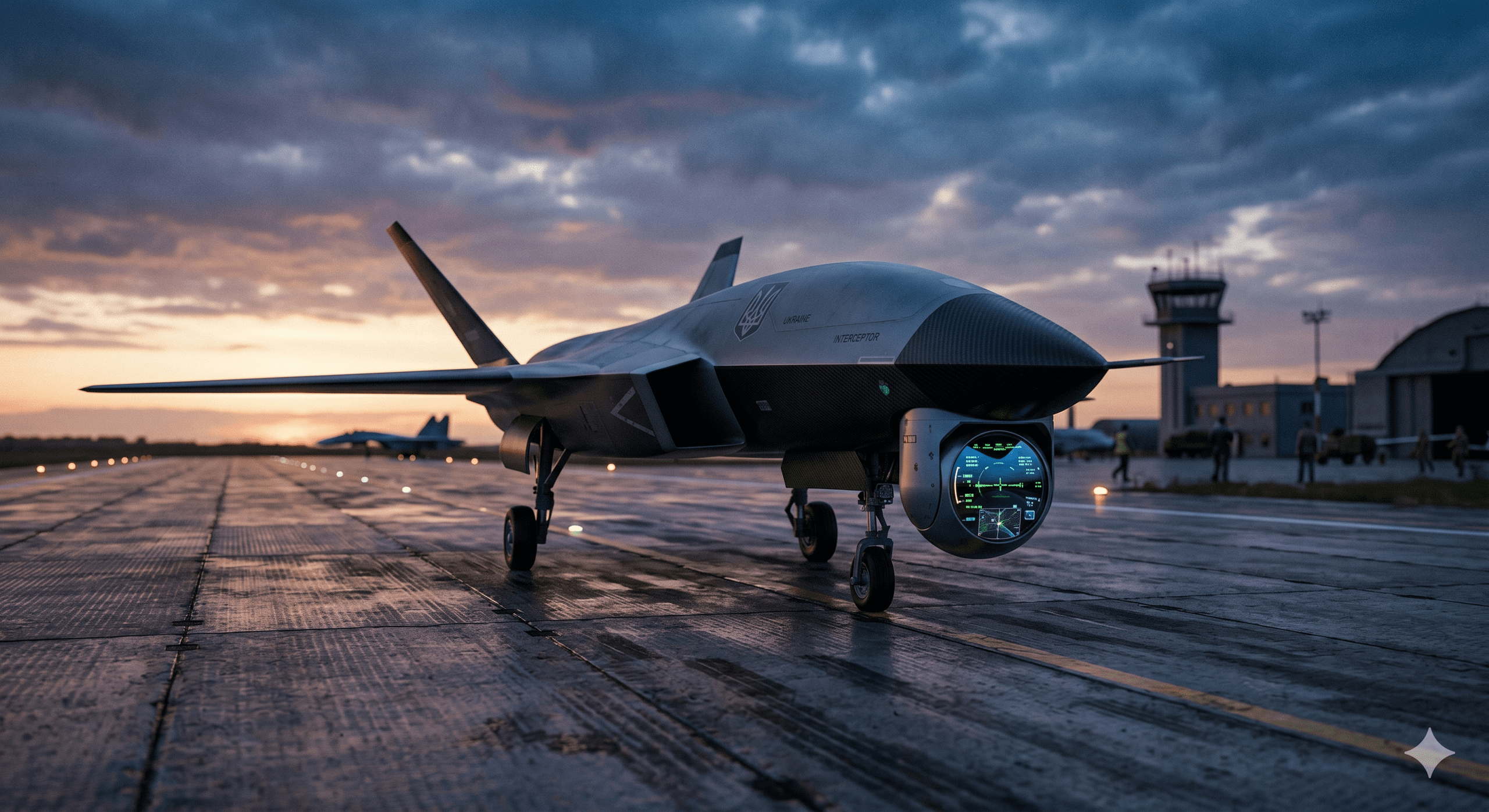
Ukraine has cleared its first autonomous drone interceptor for battlefield deployment following combat testing completed recently in the Kharkiv region.
The system was developed under the Brave1 defence accelerator specifically to counter Shahed drones, which Russia increasingly launches in coordinated saturation attacks against Ukrainian cities and infrastructure.
Those attacks rely heavily upon volume and timing because large numbers of incoming drones can gradually overwhelm conventional air defence systems and human reaction speeds simultaneously.

Autonomous interceptors reach combat testing
Ukraine’s response now involves reducing how much of the interception process still depends upon direct human control during active battlefield engagements involving multiple aerial threats.
According to Ukrainian officials, the interceptor automates roughly 95% of the engagement sequence from launch through terminal destruction of the incoming drone.
Human operators still decide which drone should be engaged before the interceptor assumes responsibility for navigation, recognition, pursuit, and strike execution independently afterward.
That operational structure allows crews to supervise engagements instead of manually piloting interceptors through every stage of aerial combat under high-pressure battlefield conditions.
Ukrainian officials believe reducing operator workload could become increasingly important during large nighttime bombardments involving several incoming drones approaching defended airspace simultaneously.
The…