












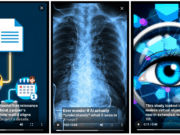


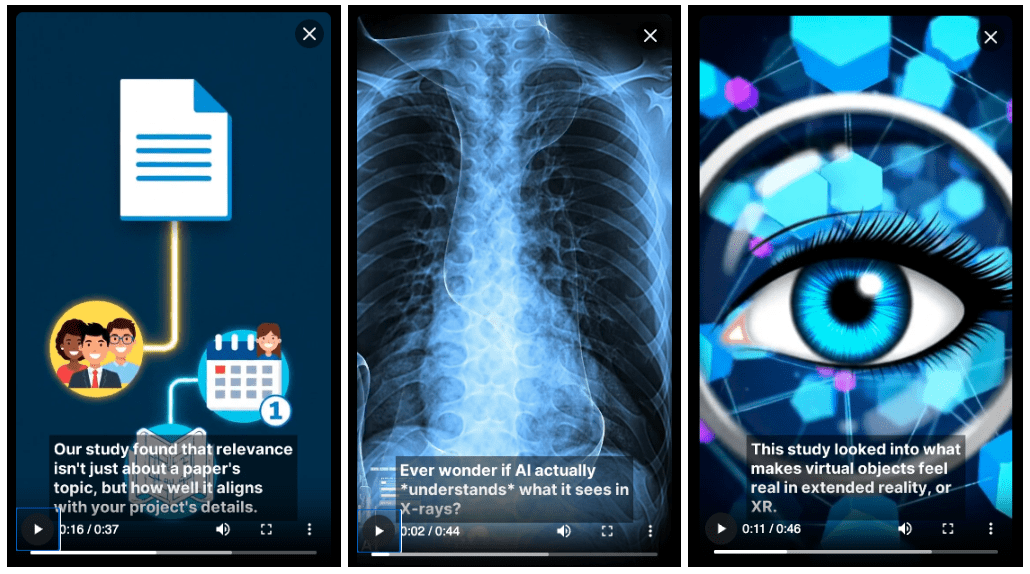
“There’s a lot of science communication happening in short form — primarily on TikTok, but also we’re seeing YouTube Shorts and Instagram Reels — these tidbits of science findings,” said Meziah Ruby Cristobal, a UW doctoral student in human centered design and engineering.
Cristobal and her colleagues built PaperTok with the goal of using AI in a more constructive way, helping researchers share accurate information while countering misuse of AI by non-scientists who may misrepresent studies.
The tool works by allowing researchers to upload a paper, which PaperTok then analyzes to extract key insights and engaging angles for a general audience. It generates a short script with an opening hook and narrative flow, producing a 45-second AI-narrated video. Each video ends with a citation of the original research, including author names and the publishing journal, to ensure transparency and credibility.
While other tools can convert PDFs into videos, Cristobal emphasized that PaperTok is designed to keep humans involved in the process. It uses a multi-step workflow where users must approve each stage, with the ability to edit the output down to individual words.
Cristobal presented the project this spring in Barcelona at the Association for Computing Machinery’s Conference on Human Factors in Computing Systems. She co-led the research with fellow doctoral student Donghoon Shin, under the supervision of UW professor Gary Hsieh.
The study’s lead contributors include Gary Hsieh, Meziah Ruby Cristobal, and undergraduate Tony Zhou.