


















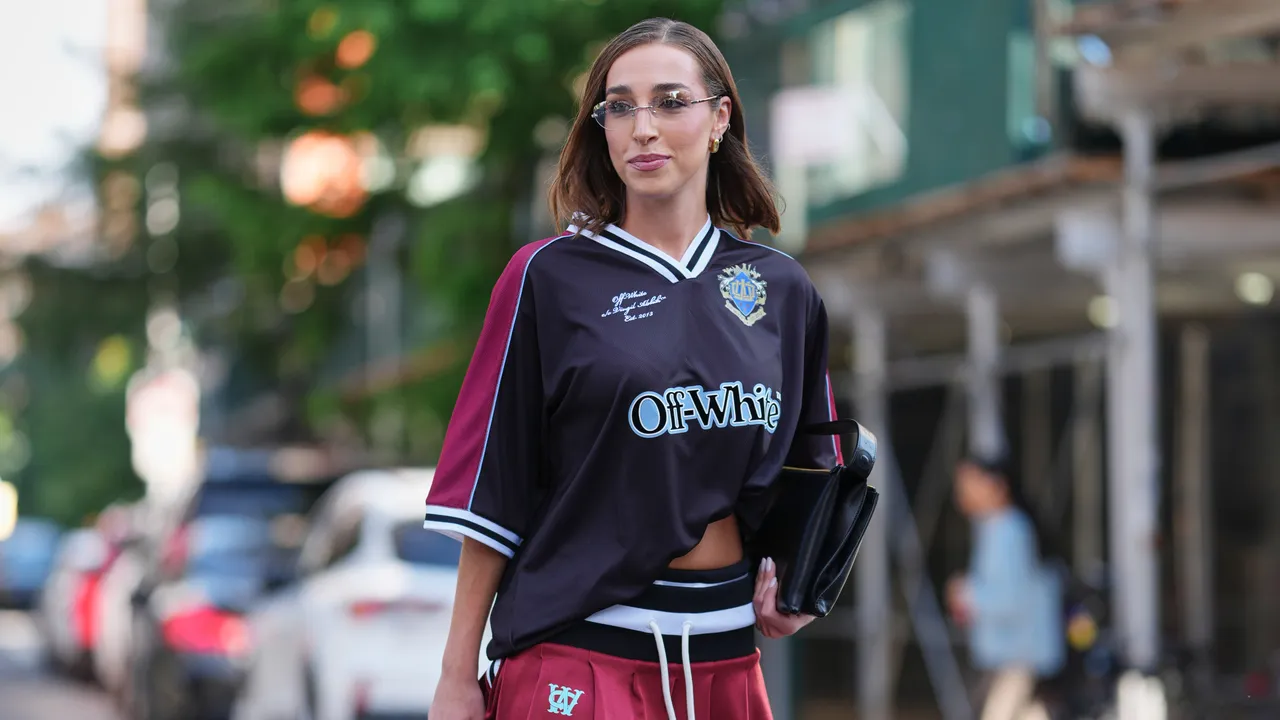
Last week, I found myself in a pub in Islington, watching England’s first World Cup match. The scene was enough to make me want head out onto the street and start clapping for our carers or something: queers in red-and-white baby tees, first-time dads in vintage Three Lions polos, and a table of sexagenarian couples decked out in England’s official 2026 shirts, their chosen footballers’ names printed across the back, as if kids wearing their favourite superhero costumes. Less inspiring were all the people I spotted in football shirts with made-up crests, sponsors, squad numbers and stripes from [insert fashion brands here]. How strange, I thought, to turn up to a football match dressed in support of… who, exactly?


And, look, I’m hardly Coleen Rooney.I only get involved with the World Cup because it coincides with my passion for beer gardens. I only own an England shirt because I was given one at a Nike activation. I only know a couple of players’ names because they’ve recently featured in the pages of this magazine. And when England inevitably loses, I will go home and sleep, undisturbed. In other words: I, too, am bandwagoning on vibes, which is why my distaste for fashion’s make-believe football shirts – which I am choosing to go on the record with here – might seem hypocritical. Football jerseys, after all, transcended the context of fandom years ago, serving as fashion items among those of us who couldn’t explain – and have little interest in learning about – 1966. So what is the difference, really, between wearing a country’s shirt simply because you happen to have been born there and wearing a fashion brand’s approximation of one?
The answer, I suppose, is that there is something uniquely embarrassing about wearing the colours of a team invented by a streetwear label who thought it looked cool. Football shirts only mean what they do because they are attached to a sense of membership: rivalry, belonging, history, obsession. Scrub all that away and all you’re really saying to the world is: “My favourite team is the trend cycle.” And – bear with me, here – ancient literature would agree. In Dante’s Inferno, the souls consigned to the entrance of hell are those who stood for nothing in life, condemned for eternity to march beneath a blank banner. It is difficult not to think of that image when confronted with a sea of football-inspired shirts emblazoned with words like “League” and “Sport”. They are the equivalent of buying pre-stacked coffee-table books on Temu: objects designed to project insiderdom without requiring any engagement.