


















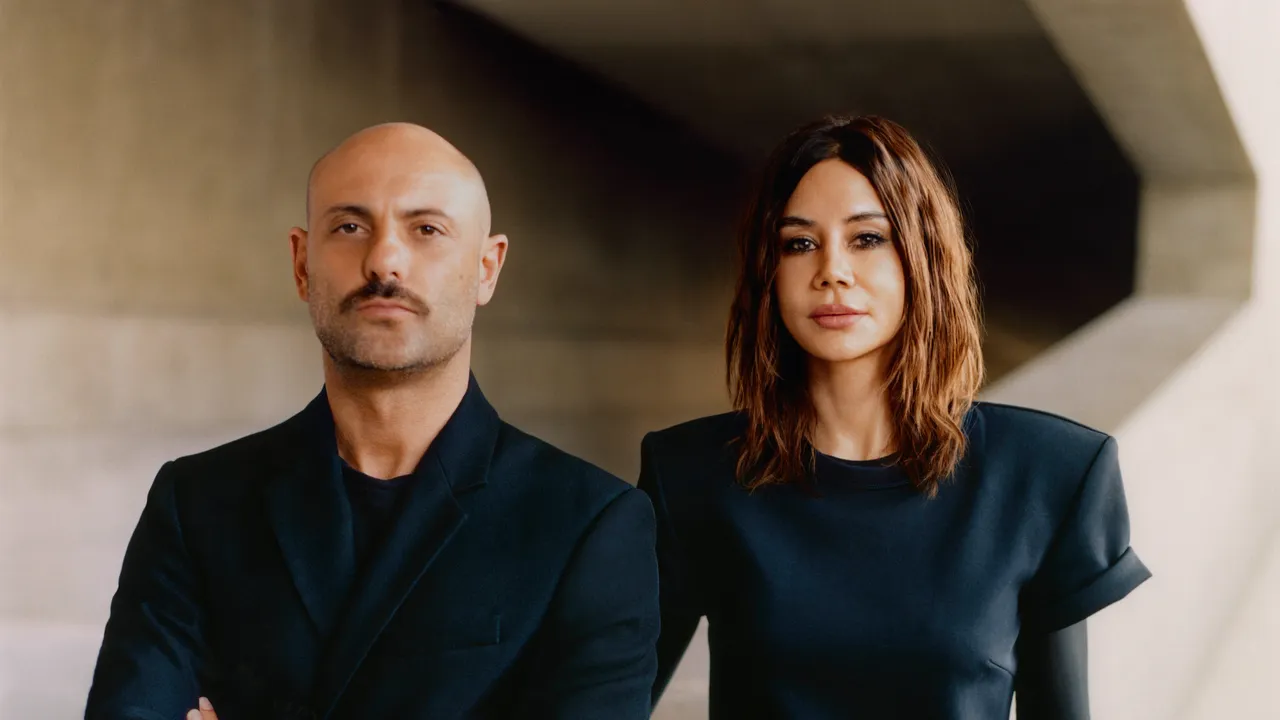
Before she was EIC at Vogue Australia, Centenera was a stylist whose credits included working with Virgil Abloh at Louis Vuitton in Paris. As someone who is constantly surrounded by clothes, she sees the value in keeping a simple, but effective wardrobe. As a result, each piece, from a boxy blazer to a slim tailored midi-skirt, possesses an additive quality – all of the pieces can seamlessly blend with what you already have.
Such a utilitarian approach to dressing might feel out of the norm for a capsule collection. Plenty of other designers have used the opportunity to make more extravagant one-off pieces. But it’s reflective of how Centenera approaches style in her day-to-day life as a mother, editor, and founder. “I think in an industry where everyone is craving newness to the detriment of a lot of brands, we wanted to push ourselves and the brand by doing something that was maybe perhaps a little bit unexpected,” she said.

Photo: H&M
Over the last two decades, H&M has partnered with a wide breadth of iconic designers, beginning with Karl Lagerfeld’s groundbreaking designer collaboration in 2004. The global retailer tapped Stella McCartney next in 2005, and she returned for round two earlier this year. Other mass-market brands have also been making the most of the luxury collaboration model of late: In March, John Galliano announced a two-year creative partnership with Zara, the cult label Eckhaus Latta teamed up with Mango, and just last week Target announced former collaborator Isaac Mizrahi as the company’s first-ever Creative Director at Large. “I mean, we ask ourselves every year if it’s worth it to continue because they are everywhere now,” said Johansson. For H&M, Wardrobe.NYC brings a highly-edited approach to capsule dressing. For Goot and Centenera, H&M gives Wardrobe.NYC an unprecedented global reach. “What is H&M? It’s a powerhouse,” said Centenera.