














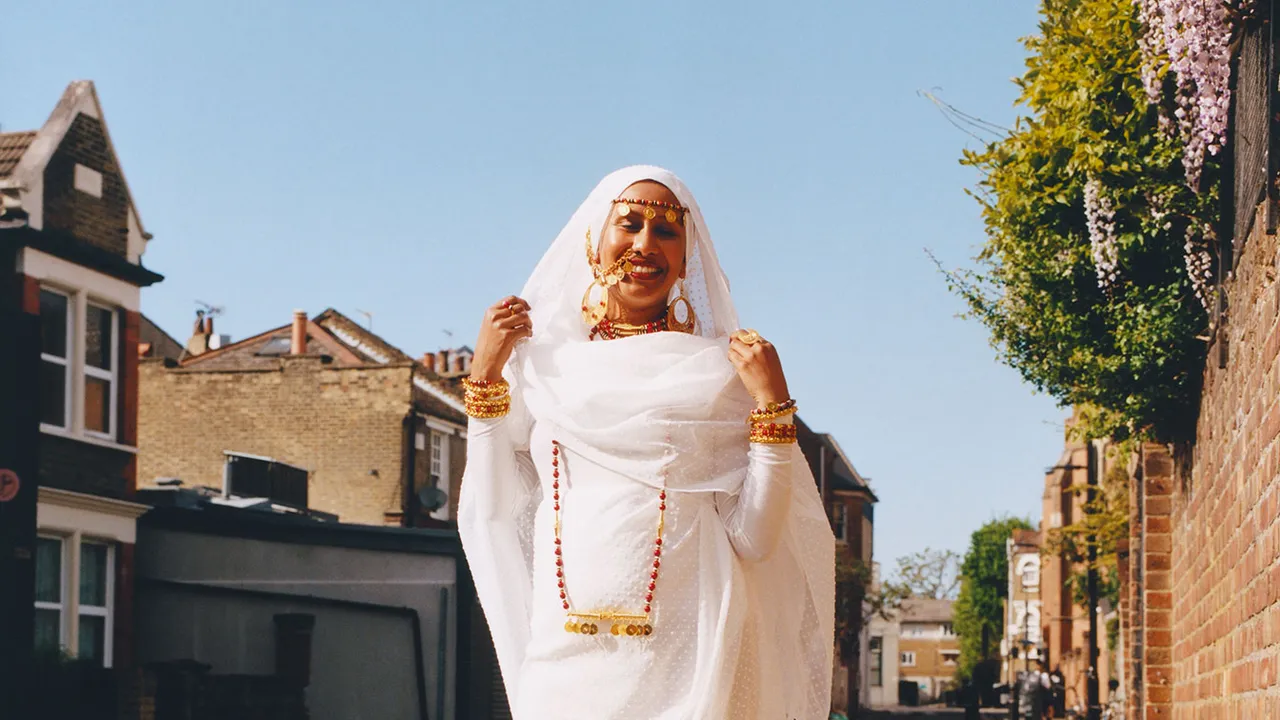
When I started wearing the hijab as a 10-year-old, it wasn’t the result of some deep theological awakening. There was no profound spiritual clarity guiding me towards it. It was when a group of very stylish older girls – of mixed ethnic backgrounds, who had just arrived from the Gulf – joined my Saturday Islamic school. There weren’t many people who looked like me in the small English seaside town where I lived. Dressed in their hijabs, these new girls looked effortless. Confident. Chic. And I thought: yes. This is how I want to be. The very next Saturday, I showed up in a hijab too – despite my mum gently suggesting that I might want to wait until I was older and understood why women wear it. But I didn’t care. I had never felt so included, so instantly part of something that made me feel good about myself and the way I looked.
Then came Monday.
I walked into my mainstream primary school in a crisp white hijab, feeling confident, grown-up, maybe even a little iconic and… let’s just say the reception was not giving Saturday-school energy. “Are you wearing that because you’re bald under there?”, “Did someone force you to wear that?” and “You’re so much prettier without it…” were some of the comments that greeted me from the children at school.
I considered giving them a deep, thoughtful answer, such as “I’m wearing it for God” or “I’m wearing it to feel connected to my community.” Instead I said, “I’m wearing it because I’ve got Lord Voldemort living on the back of my head!”
The funny thing is that, even though I was the only non-white person in my school, people barely noticed me before. I moved around a lot growing up: different homes, different schools, always within the same town where I was born and raised. I got used to blending into the background.
But the moment I walked into school wearing a hijab, suddenly I was visible. Not just visible: hyper-visible. And not in the way I wanted or expected. For a while, the attention was loud. The questions came pouring in. For the first time, what I was wearing made me the centre of attention but not in a “Wow, that’s cool” way. More in a “Why would you wear that?” way. Then, eventually, the attention stopped. I faded into the background again – just with a piece of fabric on my head that somehow said everything about me before I even opened my mouth.
It got harder as I got older. Secondary school was its own kind of battlefield. This was in the noughties. I was a teenager when girls were figuring out how to make a school uniform look like a fashion statement: adjusting skirts, rolling sleeves, wearing as much make-up and as many accessories as they could get away with.
My two best friends in secondary school were stunning. They never struggled for attention. Me? I would be wearing blue trousers, a blue cardigan and, yes, you guessed it, a blue hijab. A full monochrome moment no one asked for. I didn’t fit the beauty standard. So I compensated with personality. With humour. With being “the funny one”. And it worked.