


















- Plastic waste can now be converted directly into usable jet fuel
- A tandem reactor system breaks plastic down at 460 degrees Celsius
- Ruthenium catalyst sites delivered far better selectivity than commercial alternatives
Researchers at Nanjing Forestry University and Tsinghua University have demonstrated a new method for converting plastic waste directly into usable jet fuel, with estimated production costs ranging from $1.0 to $1.8 per kilogram.
The work comes as airlines, governments, and fuel producers continue searching for alternatives that could reduce dependence on conventional fossil-derived jet fuel.
While the technology remains under further development, the researchers say their approach combines favourable fuel characteristics with economics that appear competitive on paper.

New reactor design turns waste plastic into aviation fuel
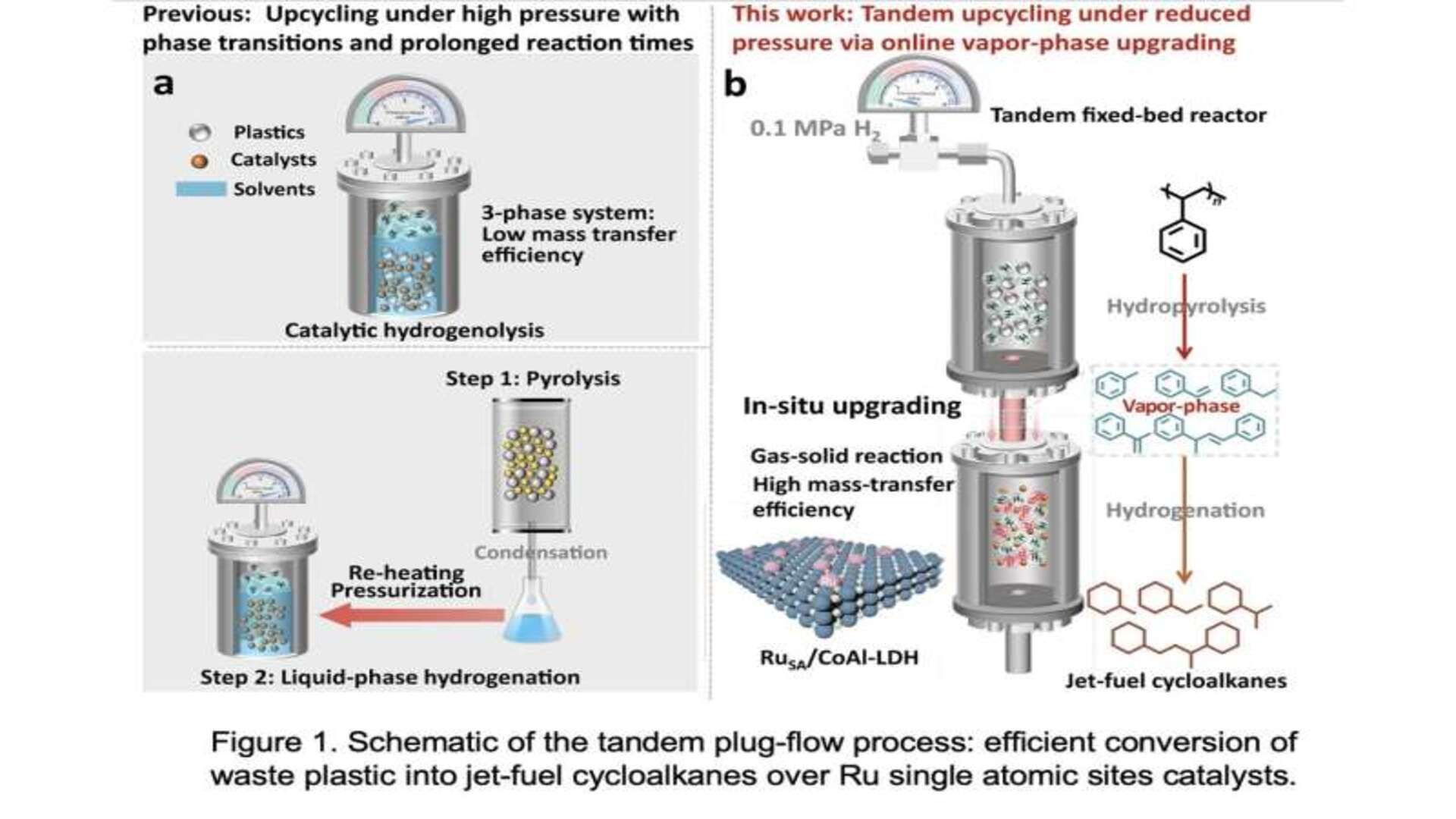
The study, published in Nature Energy, shows a tandem reactor system using hydro-pyrolysis and hydrogenolysis can convert plastic waste into jet-fuel-range hydrocarbons.
The researchers note plastic material first enters a reactor operating at 460 °C, where it is broken into smaller molecular compounds.
Those intermediate products then pass into a second stage operating at 160 °C, where a specially designed catalyst converts them into cycloalkane-rich aviation fuel suitable for further evaluation.
Professors Yadong Li and Dingsheng Wang explained that controlling the final product mix had long remained a challenge in plastic conversion research.
“The problem that kept pulling us back was selectivity,” they said, noting that conventional approaches often produce broad and difficult-to-control distributions of chemical products.
The team concentrated on atomically dispersed ruthenium, or Ru, sites supported on cobalt-aluminum oxide…