


















- Tiny bubbles could significantly reduce cooling demands inside AI facilities
- Researchers adapted nuclear reactor science for modern computing infrastructure
- Ferveret claims 15% efficiency gains over existing liquid cooling
Artificial intelligence is driving a rapid expansion of computing infrastructure, creating fresh concerns about electricity consumption and long-term sustainability.
Industry estimates suggest data centers could account for between 9% and 17% of total United States electricity usage by the end of this decade.
Roughly one-third of that power currently goes toward cooling the processors that run AI tools and other demanding workloads.

Nuclear reactor principles find a new role in data center cooling
Now, startup Ferveret believes a technology adapted from nuclear reactor research could significantly reduce the energy required to cool modern computing systems.
Founded by former MIT postdoctoral researcher Reza Azizian and MIT professor Matteo Bucci, the company developed a cooling approach called Adaptive Phase Cooling, or APC.
Rather than relying on traditional fans, the system submerges servers inside a specialized liquid that removes heat more effectively than air.
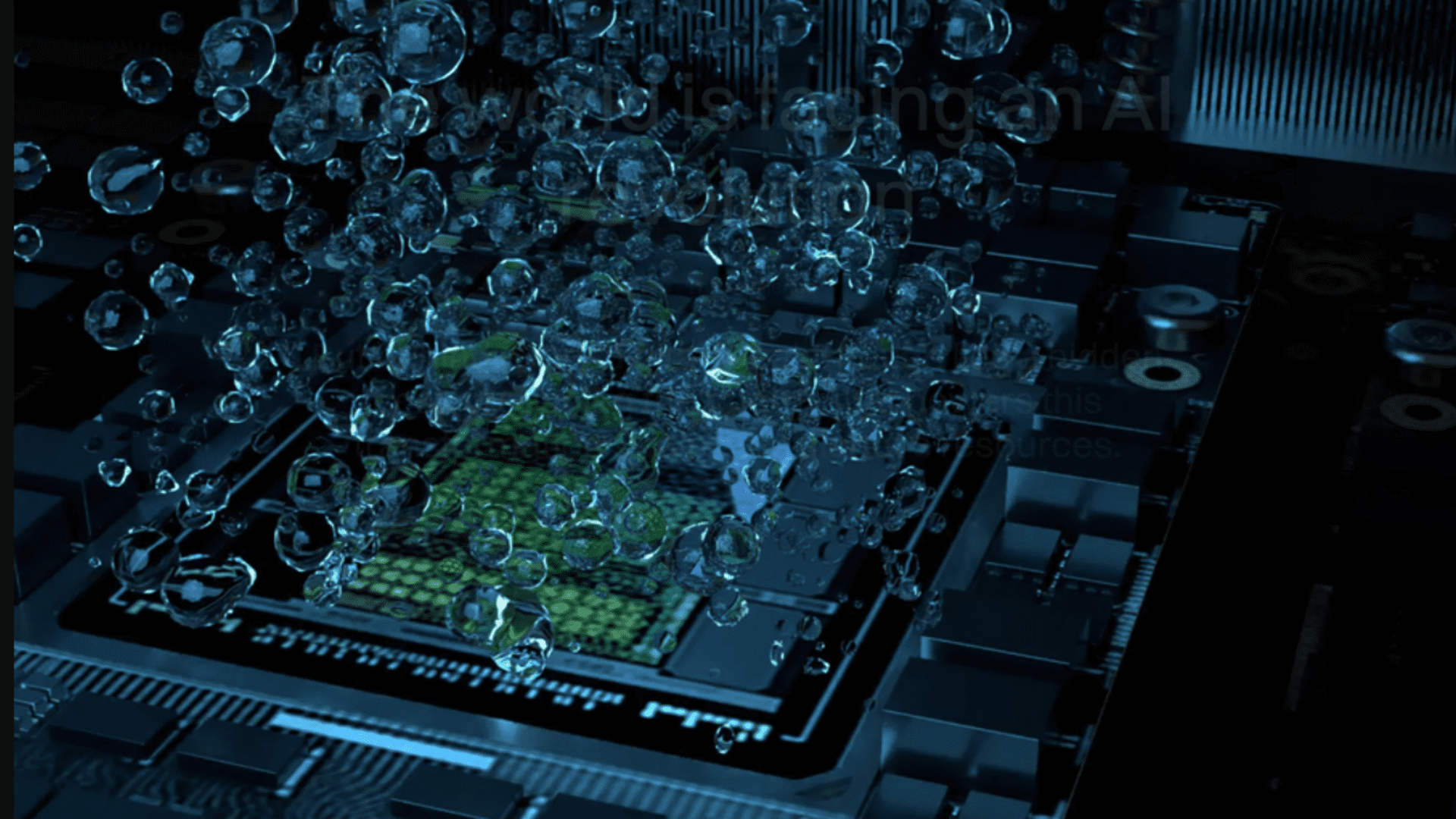
The distinguishing feature involves the formation of very small bubbles on chip surfaces during operation.
According to the founders, those bubbles separate more frequently and rapidly recondense within the surrounding liquid, accelerating heat removal.
Ferveret adapted the concept from a nuclear engineering process known as subcooled boiling, which has been studied extensively for improving heat transfer efficiency inside reactors.
Air-cooling is associated with noise, bulk, and inefficiency — three things Azizian decided he wanted no part of when he walked into his first data center in 2017.